
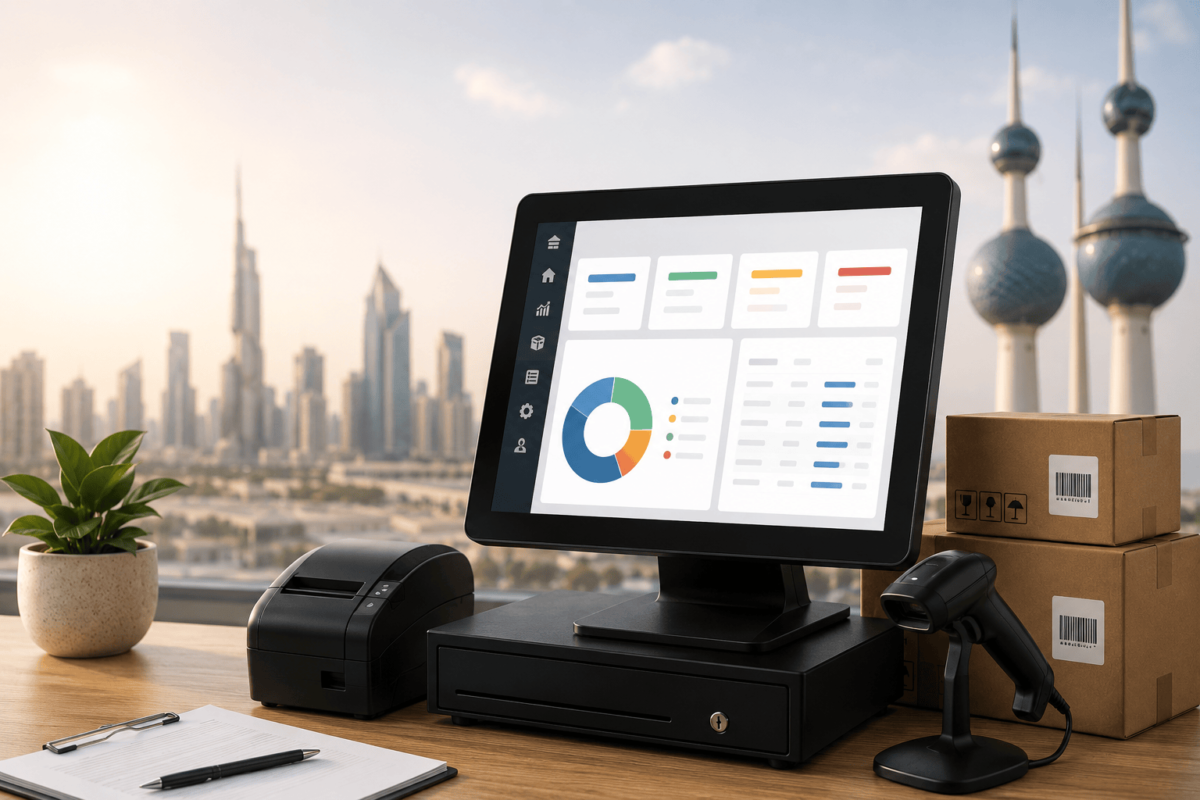
Here is a scenario every retail or restaurant owner in Kuwait has faced at least once: a customer orders something, the staff confirms it is available, and then someone disappears into the back room only to return empty-handed. That moment costs you a sale, damages trust, and points to a gap between what your system shows and what actually exists on your shelves. Point of sales in Kuwait has evolved well beyond basic billing. Today, it is the connective tissue between your inventory and your revenue. Read this guide to understand exactly why that connection defines business performance.
Defining Inventory Integration in a POS Context
Inventory integration means your point of sale system and your stock management operate as one unified system rather than two separate tools updated manually. Every sale automatically adjusts stock levels, every restock updates availability in real time, and every report reflects accurate numbers without anyone entering data twice. It removes the gap between what is sold and what is counted.
Why Kuwait’s Retail and F&B Landscape Demands More From POS Systems
Kuwait’s commercial environment moves quickly. High consumer expectations, competitive retail density, and a growing food and beverage sector mean that businesses cannot afford to operate on guesswork. Manual stock checks slow everything down. Disconnected systems create errors. Integrated inventory within a POS platform gives businesses the real-time visibility they need to make faster, smarter decisions every single day.
How Point of Sales in Kuwait Performs Better With Inventory Integration
What Real-Time Stock Visibility Actually Changes
Real-time inventory visibility means your system knows the moment an item sells, adjusts the count instantly, and flags low stock before it becomes a problem. For a busy Kuwait retail store managing hundreds of SKUs, this replaces daily manual audits with automatic accuracy. Staff spend less time counting and more time selling, which is exactly where their energy belongs.
How a Restaurant POS in Kuwait Uses Integration to Eliminate Kitchen Errors
In a food service setting, inventory is not just about products on shelves. It is about ingredients, portion control, and menu availability. A restaurant POS in Kuwait that comes with a built-in inventory integration tracks ingredient usage with respect to every order placed. When a key item runs low, the system flags it before the kitchen runs out mid-service, protecting both the menu and the customer experience.
Preventing Overstocking and the Cash Flow Problems That Follow
Ordering too much stock uses working capital for products sitting on shelves. Integrated POS systems generate purchasing data based on actual sales velocity, helping businesses order precisely what they need and when. For Kuwaiti businesses managing import lead times and storage costs, this precision directly improves cash flow without requiring a dedicated procurement analyst.
Why the Self-Checkout System in Qatar Model Is Reshaping GCC Retail Expectations
Retail technology adoption across the GCC is accelerating. The rise of the self-checkout system in Qatar reflects a broader shift toward automated, accurate, and customer-controlled retail experiences. Kuwaiti businesses watching this trend understand that inventory integration is the backbone, making such automation possible. Without stock accuracy, self-service technology falls apart at the first transaction.
Reducing Shrinkage Through System-Level Accountability
Shrinkage, which covers theft, damage, and administrative errors, is one of retail’s most persistent costs. When every sale updates inventory automatically, and discrepancies are logged and visible, it becomes significantly harder for losses to go unnoticed. Integrated POS systems create a paper trail that deters internal theft and helps managers identify where losses are occurring before they compound.
Smarter Reporting That Drives Better Business Decisions
Integrated inventory does not just track what you have. It builds a historical picture of what sells, when it sells, and at what pace. Managers can identify seasonal patterns, underperforming products, and high-demand items that need consistent restocking. These insights helps in making data-backed decisions, giving Kuwaiti business owners a genuine competitive edge in a demanding market.
The Bottom Line: Integration Is Not Optional Anymore
Running a business on disconnected stock records and manual updates is not a system. It is a liability. The businesses growing fastest in Kuwait’s retail and hospitality sectors are the ones treating inventory as a live, dynamic resource managed through their POS, not a spreadsheet updated once a week. Choosing the right point of sales in Kuwait with full inventory integration is not just a technology upgrade. It is a business decision that protects your margins, your customers, and your reputation every single day.
Frequently Asked Questions
Can inventory integration in a POS system handle multiple store locations in Kuwait simultaneously?
Yes. Multi-location POS platforms sync inventory across all branches in real time, giving central visibility over stock levels without requiring separate manual reports from each location.
How does inventory integration help during peak sales seasons like Ramadan or National Day in Kuwait?
It tracks sales velocity in real time during high-demand periods, allowing managers to reorder fast-moving items proactively before shelves empty at critical trading moments.
Is inventory integration within a POS system suitable for small businesses, or only large retail chains?
Yes, it scales effectively for businesses of all sizes that want to grow. Even single-outlet operations benefit from automated stock tracking, reduced errors, and purchasing data that larger systems traditionally provided exclusively.
How long does it typically take to set up inventory integration within an existing POS system?
Setup time varies by system complexity, but most modern POS platforms complete integration within a few days, including data migration, staff training, and initial stock configuration.
Does an integrated POS system reduce the need for manual stocktaking entirely?
It significantly reduces frequency and labour, though periodic physical counts remain good practice for verifying system accuracy and catching any discrepancies that automation may occasionally miss.
