
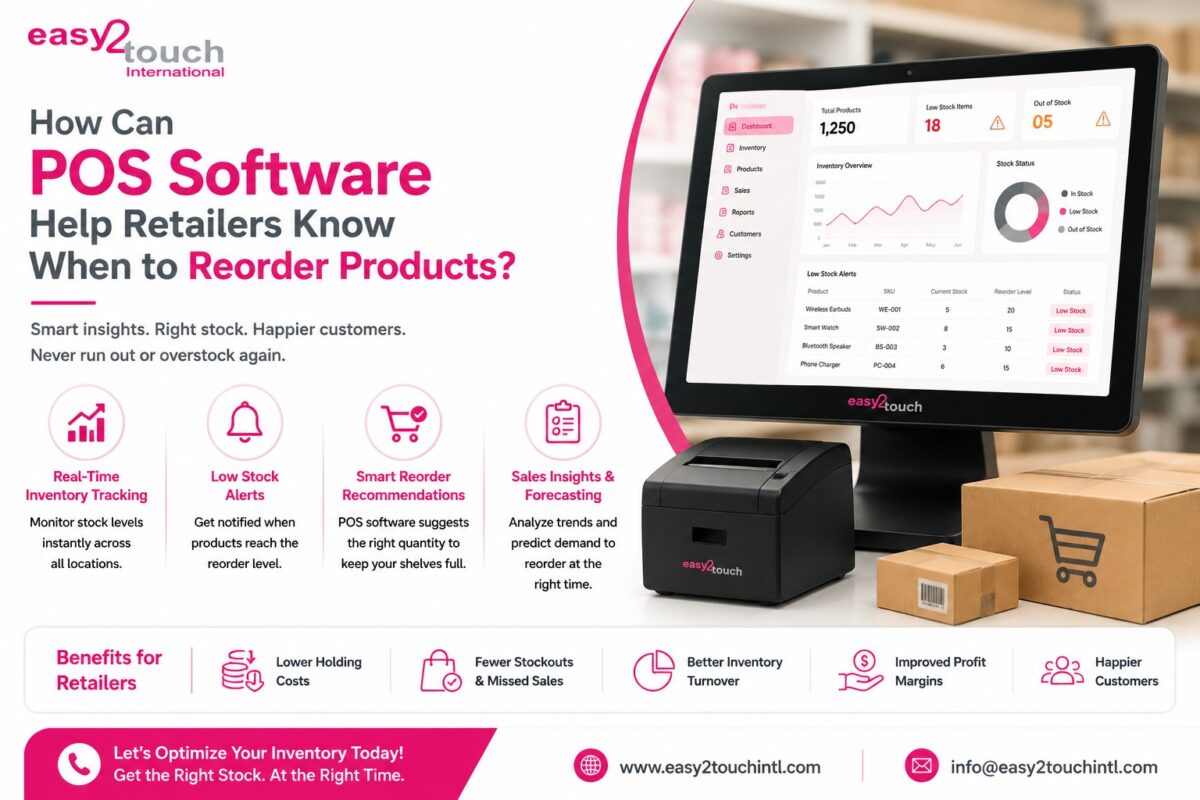
Picture a customer walking out empty-handed because the one item they wanted sold out three days ago and nobody noticed. That quiet loss happens more often than most retailers realise, and it’s usually a stock tracking problem, not a demand problem. Retail POS software in Dubai has become the fix retailers didn’t know they needed, quietly tracking every sale and flagging exactly when shelves need restocking. Keep reading, because the way this technology predicts reorder timing might completely change how you think about inventory.
What Reorder Tracking Actually Means in Retail
Reorder tracking is the process of monitoring stock levels against sales velocity to determine the right moment to restock before items run out completely. Done manually, it’s guesswork. Done through software, it becomes a precise, data-backed system.
How Retail POS Software in Dubai Tracks Stock in Real Time
Modern point-of-sale systems do far more than process payments; they quietly monitor inventory with every single transaction.
- Automatic inventory deduction: Every sale instantly updates stock counts, eliminating the manual recounting errors that used to leave retailers guessing about actual shelf quantities.
- Live visibility across locations: Multi-branch retailers can view stock levels across every outlet simultaneously, spotting shortages before they turn into lost sales opportunities.
Setting Smart Reorder Points Without Guesswork
Reorder points work best when they’re based on actual sales patterns rather than rough estimates or gut feeling.
- Custom threshold alerts: Retailers set minimum stock levels for each product, triggering automatic notifications the moment inventory dips below that predetermined safety line.
- Sales velocity calculations: The system analyses how quickly each item sells, adjusting reorder points dynamically instead of relying on static, outdated stock assumptions.
Predicting Demand Before It Becomes a Problem
Good POS systems don’t just react to low stock; they anticipate it well in advance.
- Seasonal trend recognition: Historical sales data helps predict demand spikes around holidays or promotions, letting retailers restock ahead of predictable seasonal rushes.
- Fast-moving item identification: The software flags bestsellers automatically, ensuring popular products never run out simply because nobody noticed how quickly they were selling.
Reducing the Hidden Costs of Poor Stock Management
Overstocking and understocking both quietly drain profits in different ways.
- Preventing dead stock accumulation: Accurate reorder data prevents retailers from over-ordering slow-moving items that eventually tie up cash and shelf space unnecessarily.
- Minimising stockout losses: Timely reorder alerts reduce missed sales opportunities, directly protecting revenue that would otherwise walk out the door with disappointed customers.
Integrating Hardware for a Complete Retail Setup
Software alone isn’t the full picture; the right hardware pairing makes reorder tracking genuinely seamless.
- Reliable terminal performance: Retailers often pair their software with systems like NCR POS in Dubai, known for handling high transaction volumes without slowing down daily operations.
- Barcode and scanner accuracy: Precise scanning hardware ensures every recorded sale accurately reflects real stock movement, keeping reorder calculations trustworthy and error-free.
Extending Smart Inventory Logic Beyond Retail
The same reorder logic that helps shopkeepers also translates well into other fast-paced, inventory-heavy industries.
- Cross-industry inventory principles: Restaurants and hotels rely on similar stock tracking, which is why many turn to the best hospitality software in Dubai for managing ingredients and supplies efficiently.
- Shared technology foundations: Retail and hospitality systems often share core inventory logic, proving that smart reorder tracking isn’t limited to just one type of business.
Turning Data Into Everyday Decision-Making
None of this technology matters if the insights never reach the people making purchasing decisions.
- Simplified reporting dashboards: Clear, visual reports translate complex sales data into straightforward reorder recommendations that staff can act on without needing technical expertise.
- Faster decision-making for managers: Instant access to stock insights lets managers approve reorders quickly, avoiding the delays that come with manual stock audits.
Wrapping Up the Reorder Puzzle
Running out of stock shouldn’t feel like a surprise, and with the right system in place, it rarely does anymore. Retail POS software in Dubai turns scattered sales data into clear, actionable reorder signals, helping retailers stay stocked without overspending on excess inventory. Once you let the software do the tracking, restocking stops being a guessing game and becomes a genuinely reliable routine.
Frequently Asked Questions
Can small retailers benefit from automated reorder tracking, or is it only useful for large chains?
Small retailers benefit significantly, since manual tracking often causes bigger relative losses for smaller inventories where every missed sale noticeably impacts overall profit.
How does POS software handle products with irregular or seasonal demand?
It analyses historical sales patterns to adjust reorder points dynamically, recognising seasonal spikes rather than applying the same fixed threshold throughout the entire year.
Does reorder automation eliminate the need for manual stock checks entirely?
Not entirely; occasional physical audits still help catch discrepancies from theft or damage, but automation drastically reduces how often manual counting becomes necessary.
Can POS systems suggest reorder quantities, not just alert timing?
Yes, many systems calculate suggested reorder quantities based on sales velocity and lead times, helping retailers avoid both understocking and unnecessary overstocking mistakes.
How quickly do reorder alerts typically reach store managers?
Most systems send alerts instantly or within minutes of stock crossing the set threshold, allowing managers to act quickly instead of discovering shortages days later.
